

A locked cupboard may keep its deepest room
in the hand that reaches for it.
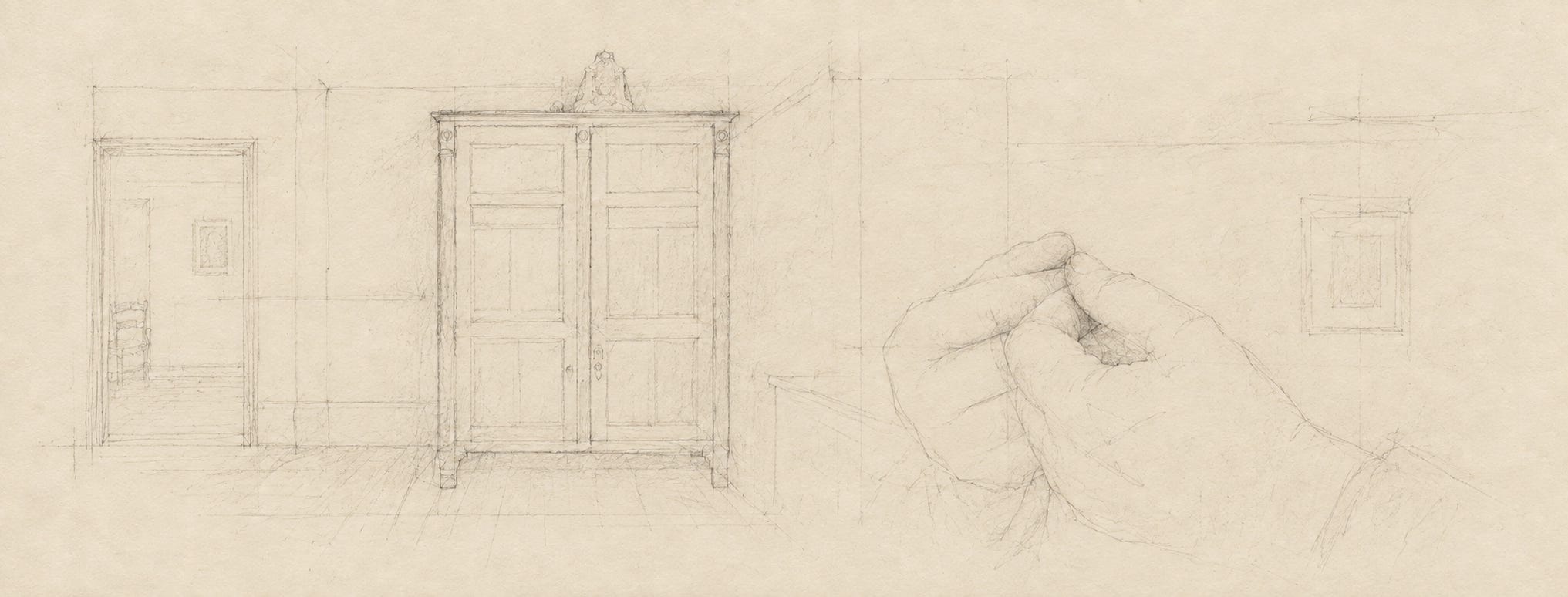
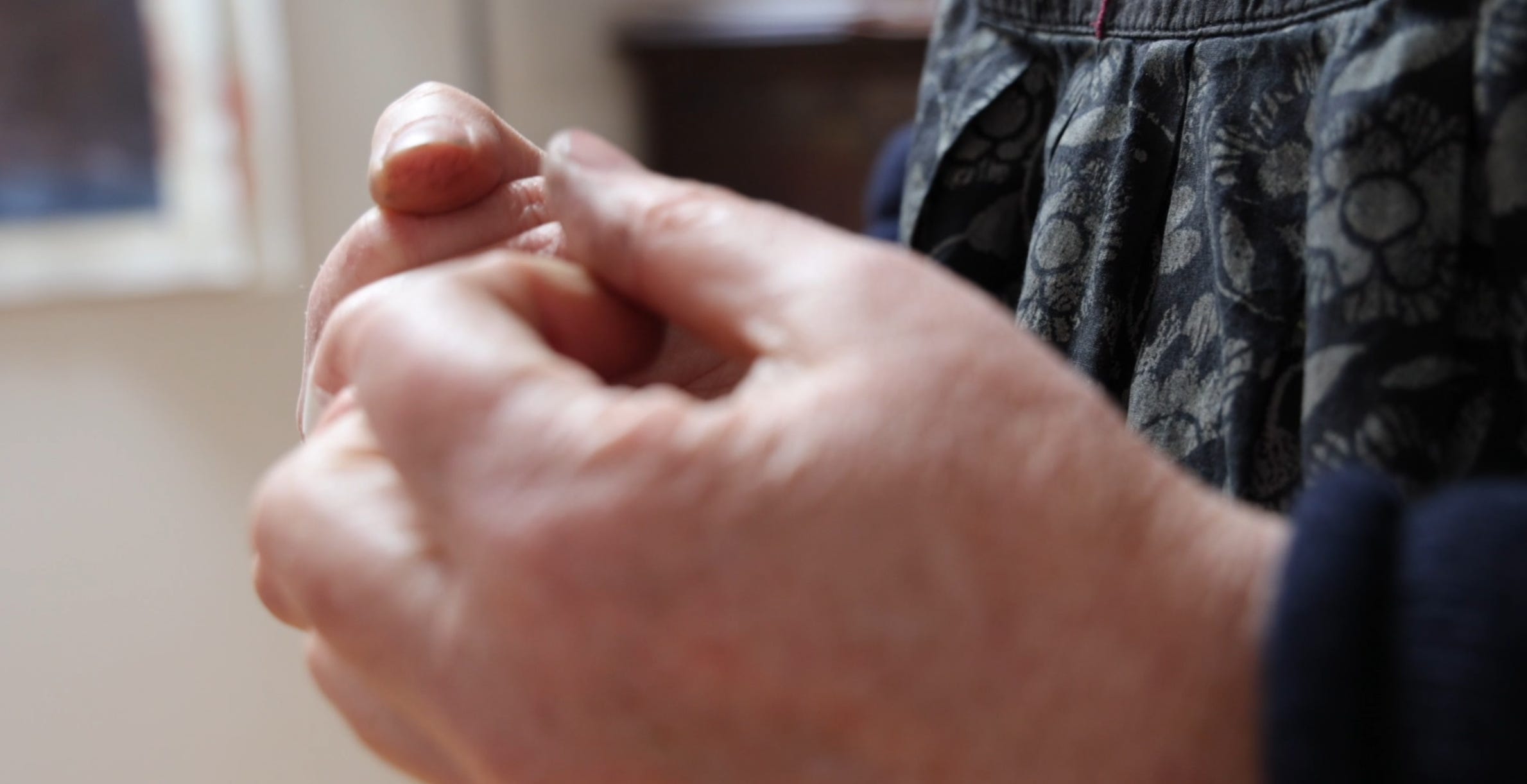
Banner: Still from Nuala Clarke, Cófra, 2022. Courtesy of the artist.
At the back of the kitchen section in Hearth and Home at the National Museum of Ireland, Country Life, there is a large wooden cófra.
Nuala Clarke noticed it after spending some time looking for an artefact she could work with. The cófra held back. Its position at the rear of the exhibit, away from the main pull of the room, drew her towards it.
She liked its bulk and the darkness settled into the wood. She felt tentative around it. It seemed to hold secrets, though she also remembers having a fierce desire to own it.
Permission had to be sought before she could approach the cupboard. Once she was able to examine it, it added a further distance. The doors were locked and the museum could find no key.
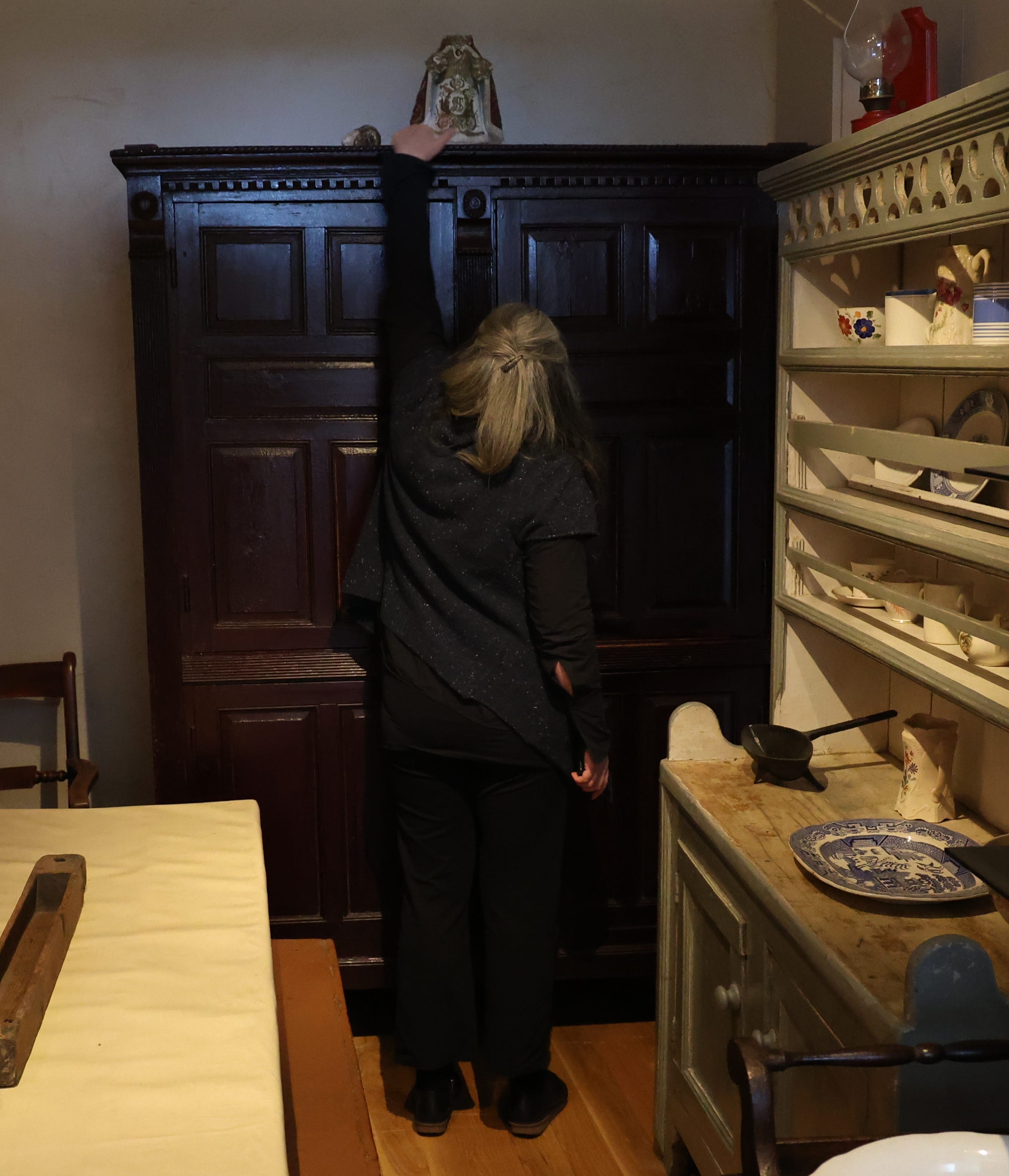
The cófra in the kitchen section of Hearth and Home, National Museum of Ireland, Country Life. Photograph courtesy of Nuala Clarke.
The cupboard rose beyond Nuala’s reach and stayed locked and by the time the museum sent photographs of it open in its former home, the missing key had already made another interior possible. Back home Nuala discovered that she had a studio cupboard that was a cófra she had somehow overlooked, among older furniture with locks still in place and old keys waiting in the house and shed.
She also began thinking about why domestic cupboards had locks. In the rural Ireland she remembered, a front door might remain unlocked. Neighbours could enter and announce themselves from inside the house. Food cupboards and sideboards were secured within that relatively open home.
The position of the lock has since shifted. Many households now lock their external doors while the furniture inside remains open.
This change gives the museum cupboard a particular spatial history. It once created a protected area within the home. In the museum its lock separates the visitor from the object’s interior. The key has disappeared, though the act of locking remains visible.
In 2022 Nuala and I worked together for eight weeks through Guide, the body-based programme I developed during the FOLKLIFE residency at the National Museum of Ireland, Country Life.
Guide grew from my interest in what happens when the body is given a greater role in an encounter with a cultural artefact. Museums tend to direct visitors through sight and written information. The position of the body is usually regulated. We move along an established route and keep a suitable distance from the objects.
I wanted to slow that process and create time for another kind of attention.
One of the phrases in the presentation for Guide was Space as doing. I was drawing on Henri Lefebvre’s description of space as something plotted, shaped, and felt into existence through bodily movement. Another slide carried the instruction Create a gap.
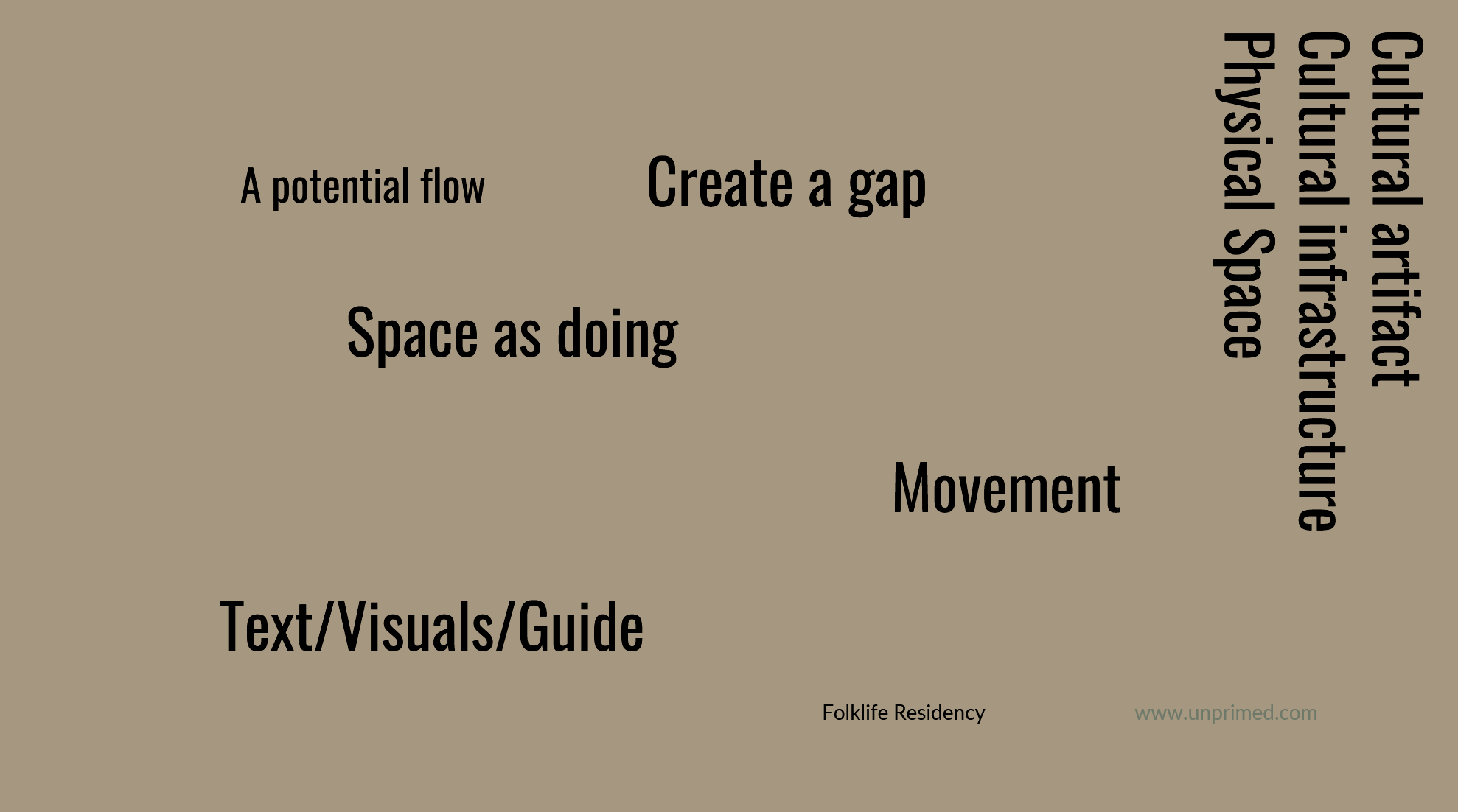
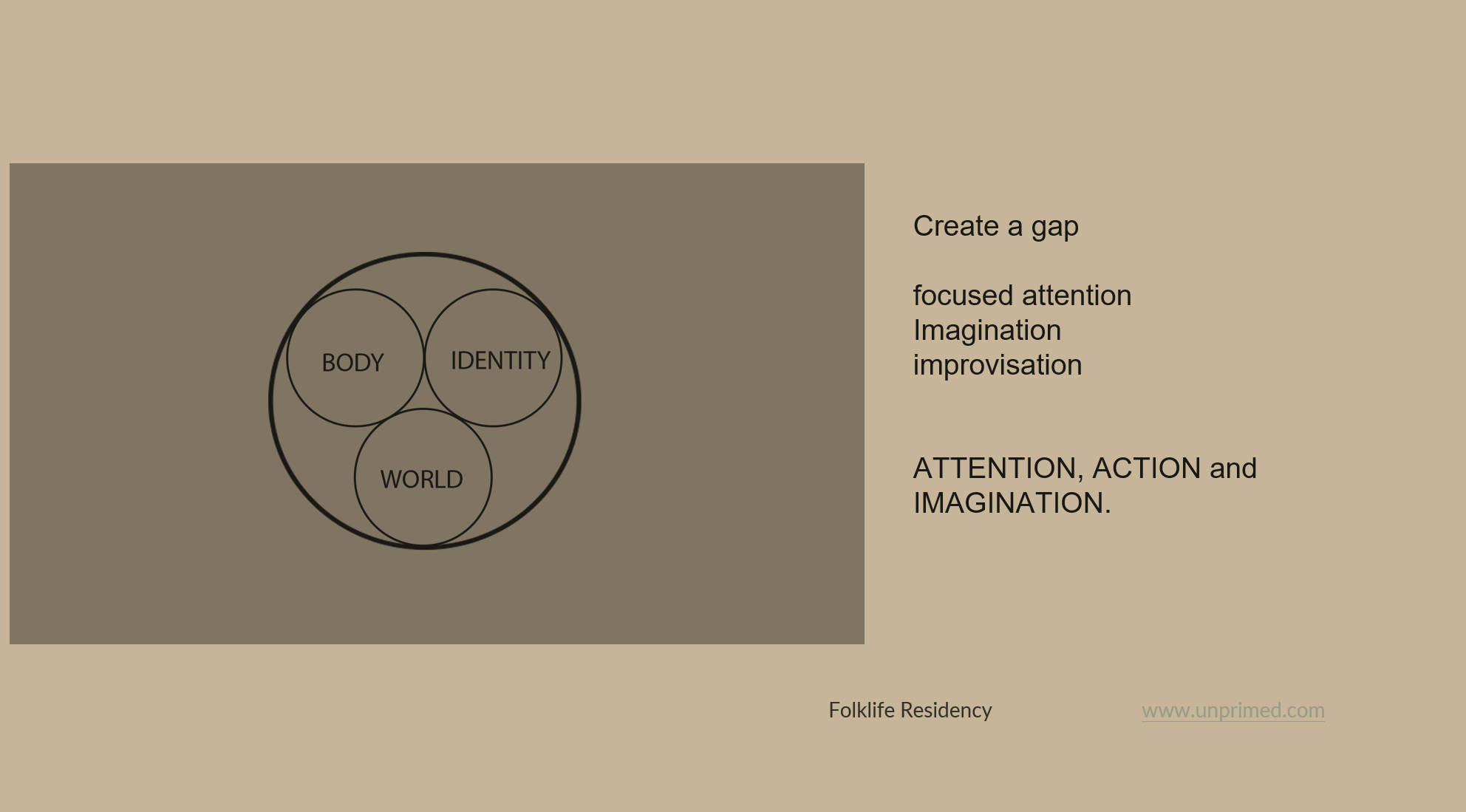
Rajinder Singh, Create a Gap, presentation slides from Guide, FOLKLIFE residency, 2022. Courtesy of the artist.
The gap was the time between encountering an artefact and deciding what it meant. The participating artists researched their chosen objects and kept journals. They improvised physically and reviewed the movements that emerged. Our conversations became part of the process, and the material was gradually developed into a score using words, images or recorded movement.
Nuala was working on another project at the time. She remembers our meetings as creative time set aside for an exploration outside her usual practice.
“If the structure of meeting and being given exercises hadn’t been set up,” she told me, “the work would not have happened.”
She felt able to experiment, though she wished we could have met more often and in person.
I gave Nuala exercises that asked her to imagine the cupboard through its physical qualities. She could move around it or picture herself inside it. She could think about its shelves and the food it once held. I asked her to pay attention to its edges and stiff latch, and to begin with a very small movement.
One finger could start the work. The wrist might follow.
Nuala gathered the old keys from the cófraí around her home and from cupboards stored in the shed. Her short video begins with those keys turning in her hands.
Nuala Clarke, Cófra, from Dance in the Key of Paternal Grandmother, 2022. Video courtesy of the artist. Developed during Guide as part of the FOLKLIFE residency at the National Museum of Ireland, Country Life.
The keys touch against each other.
Clink.
Nuala puts them into her pocket and brings her empty hands back into the frame.
“I’ve been using this cófra at the museum as a map,” she says, “its locked, enclosed space which I could fit into.”
The cupboard remains outside the image. Nuala begins to form its space with her hands. She imagines a bowl being moved along a shelf and sees a semicircle of flour left behind. Her palms take the shape of the bowl and then begin making bread.
Her paternal grandmother had made bread every day.
As Nuala follows the action of kneading, her knuckles come together and her fingers point inward. At that exact moment she recognises a movement her grandmother used to make.
The inward turn was separate from breadmaking. Her grandmother made it while sitting or talking. It was a personal habit of the hands which Nuala had seen often enough to carry into her own body.
Her grandmother had died about twenty years earlier. Until this moment, she had not entered Nuala’s thoughts during the work.
Nuala’s left hand comes underneath and cradles her right. She describes this as the point when the recognition reached her heart.
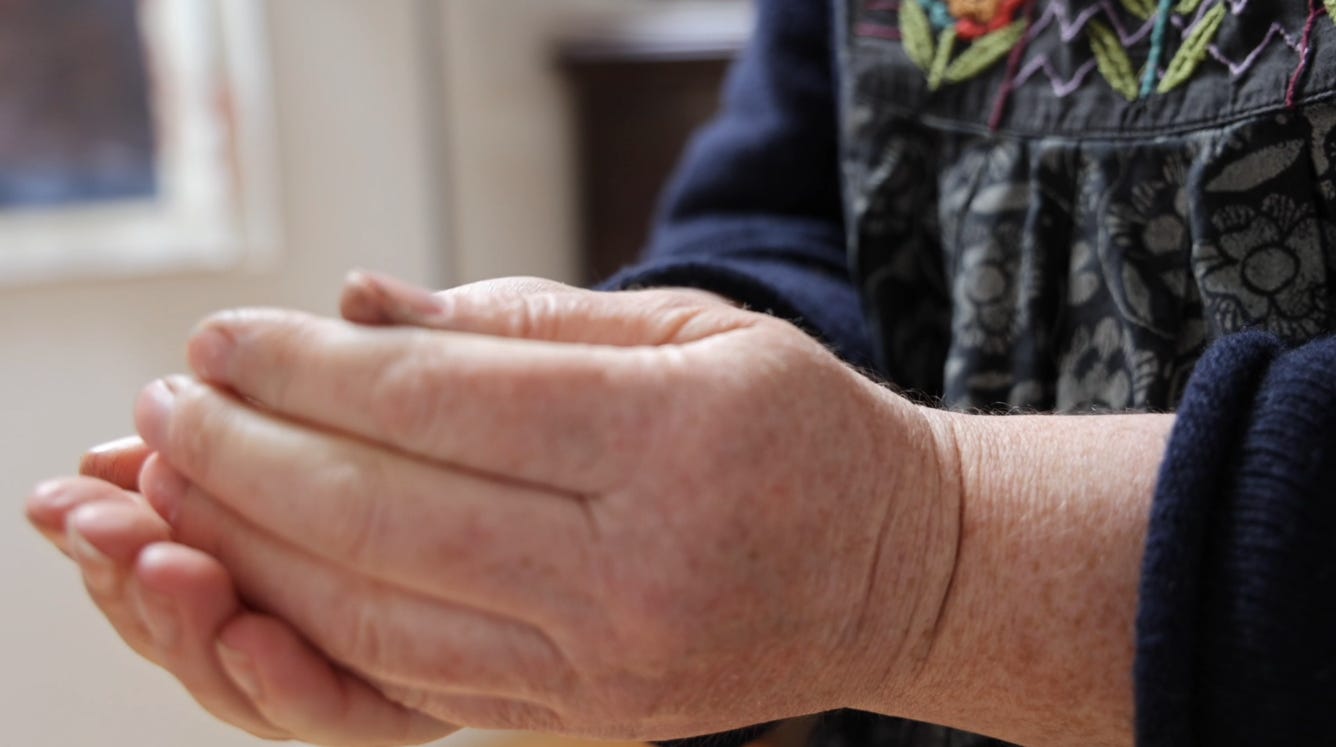
Nuala Clarke, still from Cófra, 2022. Courtesy of the artist.
“Reawakened hands,” she says. “My grandmother in my hands. There she is. In my hands.”
The memory emerged from the movement itself. Nuala did not begin with the intention of making a work about her grandmother. She began with the cupboard and the imagined activity around it. Breadmaking led her hands into a position where another gesture could become recognisable.
When Nuala sent me an early version of the film, I wrote back almost immediately:
“How absolutely wonderful the dance of wrists, hands and fingers! I am mesmerised.”
The scale of the movement mattered. During Guide, we had spoken about making barely perceptible actions visible. Nuala’s discovery took place within a few centimetres around the wrist. Her face remains outside the film and the cupboard itself is absent. The hands carry the work.
Nuala later described the process as “unlocking inherited movement and the value or collectability of that.”
The word collectability brings the work directly into conversation with the museum. The cófra has been taken from a house and preserved within a national collection. Its material form can be catalogued and displayed. The museum can record where it came from and recover photographs of its earlier location.
An inherited gesture survives differently. It passes between bodies through repeated observation. Someone sees a familiar movement so often that it enters their own physical habits. It may remain there for years before becoming visible.
Nuala’s work asks whether such a movement can be collected. Her answer takes the form of a dance.
She called the piece Dance in the Key of Paternal Grandmother. The title allows the key to have more than one use. There are the physical keys placed in her pocket and there is the key in which the movement is performed. The missing cupboard key gives way to a physical means of entry.
Near the end of the film Nuala offers the movement to the viewer.
“You can do it if you wish.”
She gives one direction. The movement should be small and circular, turning inward. It is tight, angular, tense and plaintive.
Her fingers bend separately and the wrists follow. The gesture that passed from her grandmother into her own hands is now made available to another body. Each person who attempts it will change it slightly.
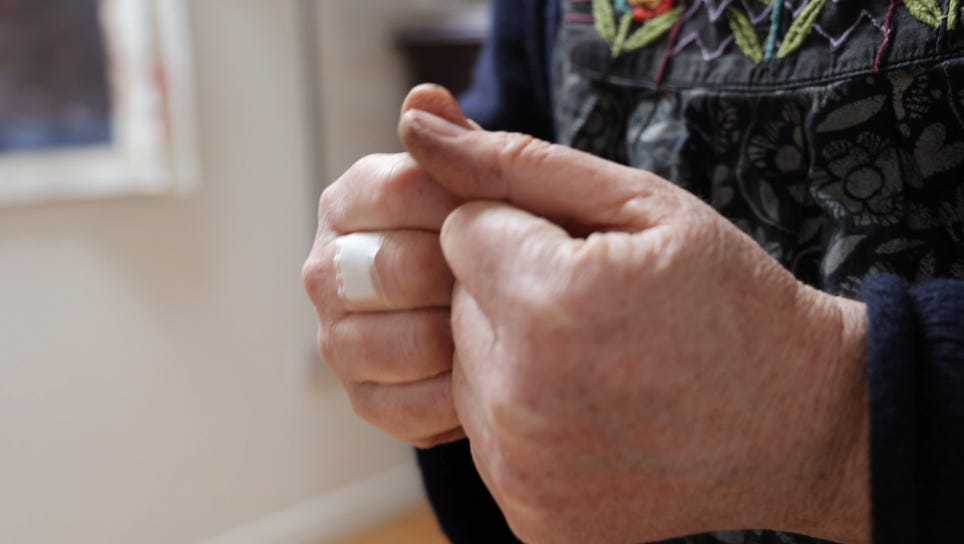
Nuala Clarke, still from Cófra, 2022. Courtesy of the artist.
I have returned to this work while developing The 2nd Plan because the museum floor plan records only one part of the cófra’s position.
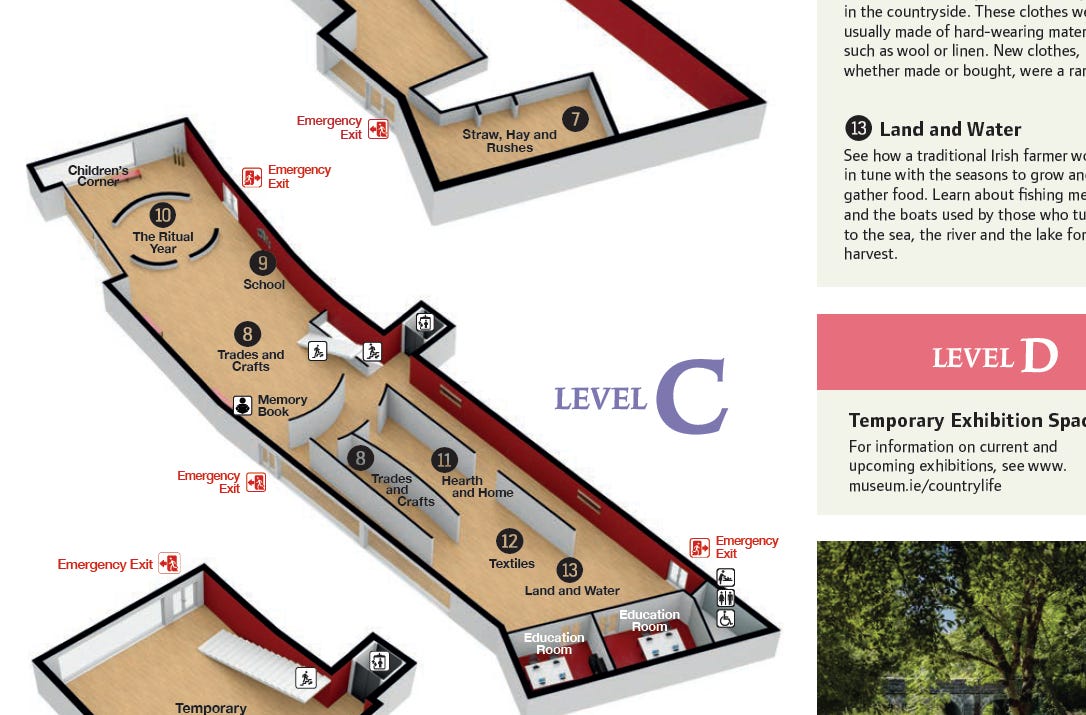
Visitor floor plan, National Museum of Ireland, Country Life. Hearth and Home is located on Level C. Courtesy of the National Museum of Ireland.
The plan places the cupboard within the kitchen section of Hearth and Home. It can direct a visitor to the gallery. It cannot show the cupboard’s relative darkness at the back of the exhibit or the hesitation Nuala felt when she approached it. Her desire to own it also remains outside the drawing.
These conditions belong to its second plan.
The second plan begins with the route Nuala took through the collection and the time she spent searching for an artefact. It includes the upward reach of her arm and the locked doors that changed her relationship with the object. It then leaves the museum for the similar cupboard in her studio and returns through the archive photographs of the cófra in its previous home.
The route eventually enters her hands.
If I were to draw this second plan, I would begin with the outline of the kitchen gallery and the position of the cupboard against its rear wall. I would mark Nuala’s approach and the vertical reach towards its top. The locked interior would remain as an empty rectangle.
A line would then travel towards the studio cupboard and the older furniture with its unused keys. When it returned to the museum, its scale would change. The line would become small enough to follow the fingers and turn inward at the knuckle. The curve made by the left hand cradling the right would form the final space in the drawing.
The grandmother would remain beyond the plan. The drawing could record the movement through which she became present and the short interval during which one hand held the other.
This work helps me understand what a second plan can contain. It can register the way an artefact is approached and how its meaning changes through sustained attention. It can also follow a movement as it leaves the physical site, enters memory and returns in another body.
I watch the film again.
Her knuckles meet and the fingers turn inward. The left hand comes underneath and holds the right.
“There she is,” Nuala says.
Dance in the Key of Paternal Grandmother is a work by Nuala Clarke, developed during Rajinder Singh’s Guide, a body-based programme created for the 2022 FOLKLIFE residency at the National Museum of Ireland, Country Life. FOLKLIFE was curated by Culture Works in collaboration with the National Museum of Ireland, the Linenhall Arts Centre, Artsquad and Mayo Arts Office, with funding from the Arts Council of Ireland. Nuala Clarke’s work and the accompanying images are reproduced with her permission.